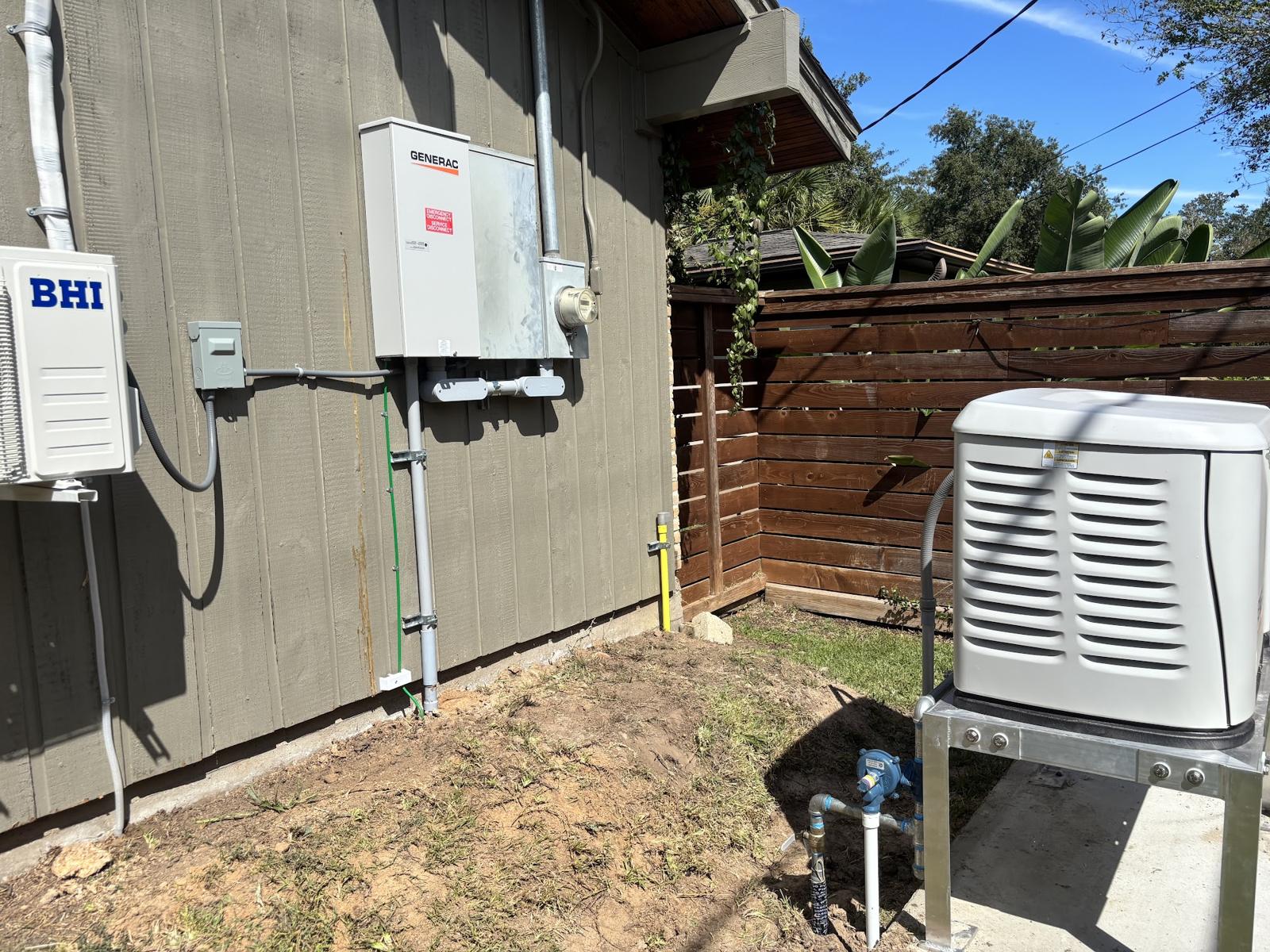
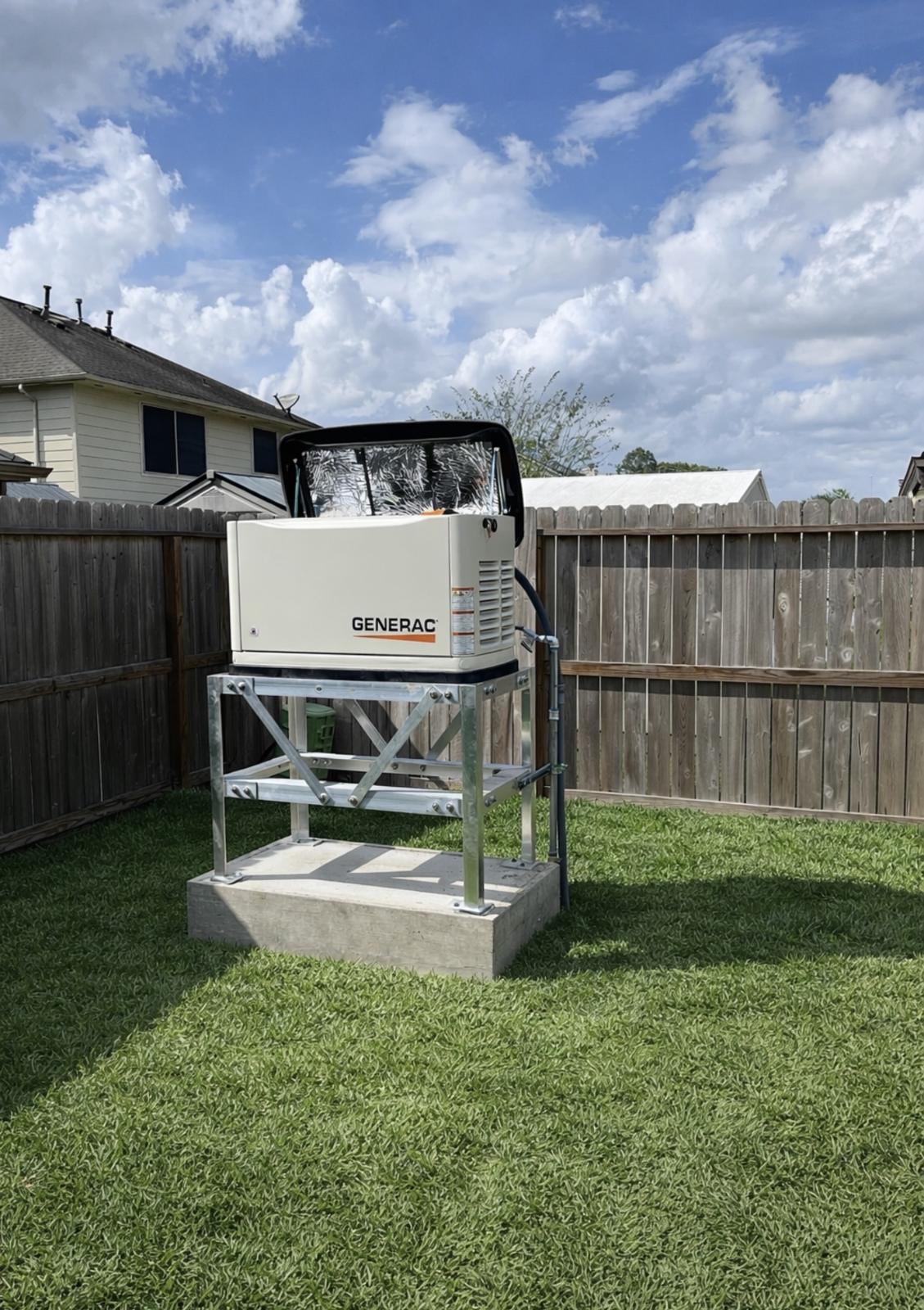
Get your generator Storm Ready
Gulf Coast hurricane and winter freeze preparedness for homeowners with standby generators: checklists, what to do during and after an outage, and how to stay safe.
Why standby generators matter in Gulf Coast storms
Hurricanes, tropical storms and hard freezes can leave homes without power for days. A standby generator keeps the essentials running automatically: refrigeration, lights, A/C or heat, sump and well pumps, and medical equipment.
But a generator only helps if it starts when it’s needed. Weak batteries, low fuel, missed maintenance and debris around the unit are common reasons a generator fails on storm day. A little preparation ahead of the season makes the difference.
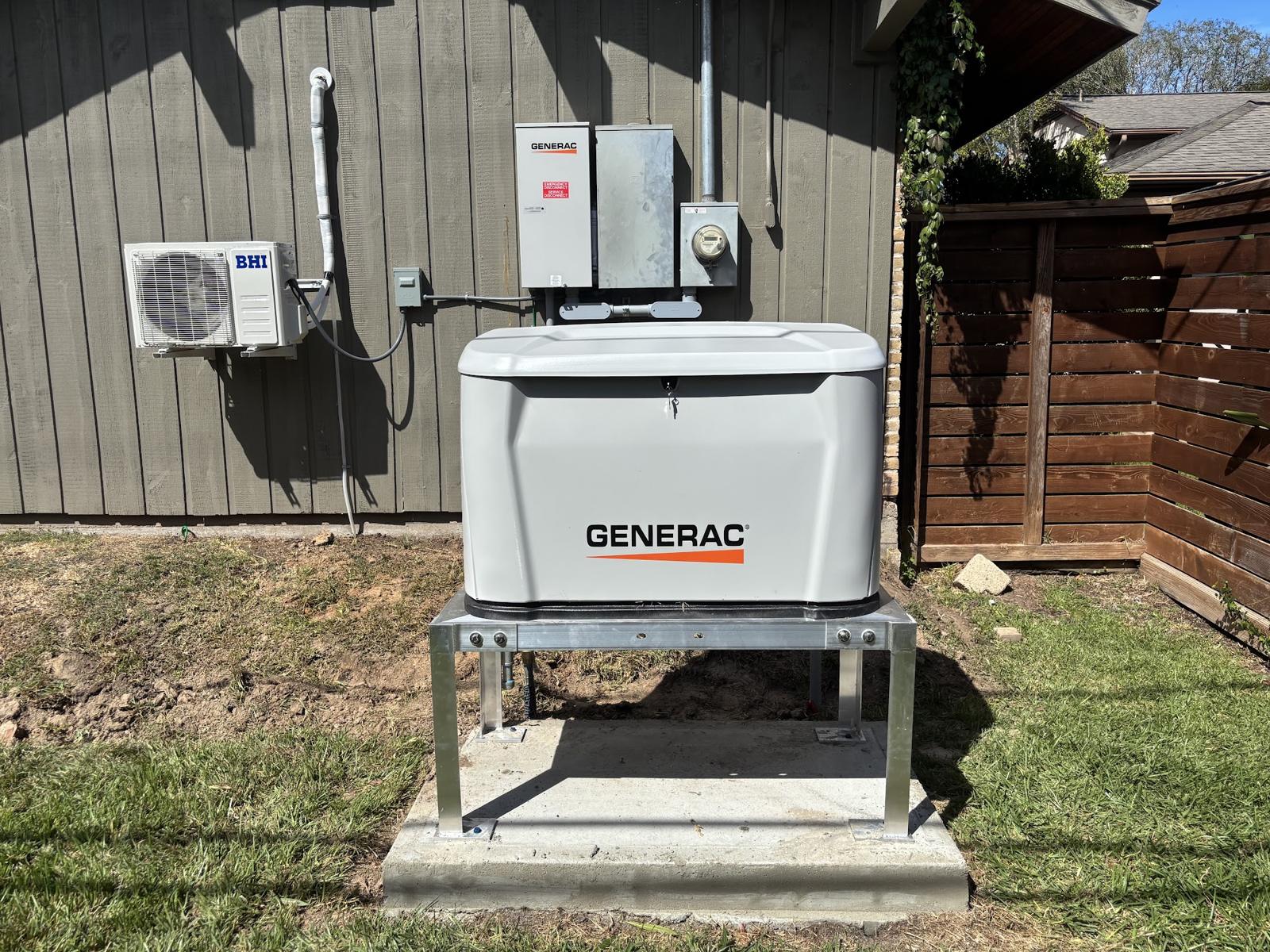
Pre-hurricane-season checklist
- Fuel supply. Confirm natural gas service is on and the meter and line to the generator are clear; for propane, check the tank level and top it off early, since deliveries slow before a storm.
- Battery. Check the battery’s age, terminals and charge. A weak battery is one of the most common reasons a standby generator won’t start.
- Oil and filters. Check the oil level and condition and the air filter, and have oil changed on the manufacturer’s schedule.
- Exercise cycle. Make sure the weekly or scheduled exercise cycle is running and the unit isn’t showing warnings.
- Transfer switch test. Have a simulated outage run so the transfer switch actually moves your home to generator power and back.
- Clear debris around the unit. Keep plants, fencing, stored items and yard debris away from the enclosure and vents, and secure loose objects that could blow into it.
- Mobile Link / OnCue check. Open the Mobile Link (Generac) or OnCue (Kohler) app and confirm the unit is online and reporting a ready status.
Pre-freeze checklist
- Fuel supply. Confirm gas service and propane level; propane demand jumps during a freeze.
- Battery. Cold weather is hard on batteries. Test it and check the charger before temperatures drop.
- Oil. Check oil level and confirm the right oil for your unit and the conditions.
- Exercise cycle. Let the unit complete its exercise and watch for any alerts.
- Transfer switch test. Run a test so you know the switch transfers cleanly.
- Clear around the unit. Keep the enclosure, intake and exhaust clear of leaves, ice and stored items.
- Mobile Link / OnCue check. Confirm remote monitoring is online and notifications are turned on.
What to do while the power is out
- Let the generator do its job. A standby system starts and transfers automatically.
- Keep heavy loads reasonable so you stay within your generator’s capacity.
- Watch your Mobile Link or OnCue app for alerts.
- Keep the area around the unit clear and stay away if there is standing water or storm damage.
Once power is restored
- Confirm the transfer switch returned your home to utility power.
- Look for debris, damage or flooding around the unit, but don’t open the enclosure if it was under water.
- Long run times use up oil; check it or schedule service.
- Call Kelm for an inspection if anything looks or sounds wrong.
Generator safety and carbon monoxide
- Never run a portable generator indoors. That includes garages, sheds, crawl spaces and porches, even with doors or windows open.
- Carbon monoxide is invisible and deadly. Keep portable generators well away from the house and away from windows, doors and vents, and install battery-powered CO alarms.
- Never backfeed your home by plugging a generator into an outlet. Use a properly installed transfer switch.
- Smell gas? Leave the area and call your gas utility or 911 from a safe place.
Related Kelm services
Pre-hurricane tune-up · Generator inspections · Maintenance plans · Remote monitoring · Service & repair · Hurricane prep guide
Pre-Hurricane Tune-Up
Get your standby generator checked before storm season, when the schedule is open, parts are easier to get and the weather is calm.
Learn moreGenerator Inspections
A thorough, documented look at a standby generator system, whether you’re buying a home, recovering from a storm or just not sure when it was last checked.
Learn moreMaintenance Plans
Choose Gold (two visits a year) or Silver (one visit a year) for your air-cooled or liquid-cooled standby generator. Every visit follows the same written checklist.
Learn moreRemote Monitoring
With Kelm’s Mobile Link monitoring plan, if your generator has a fault, we’re notified and send a technician out to correct it, with no service call fee.
Learn moreGenerator Service & Repair
Diagnostics, alarm codes, repairs, parts and warranty work for Generac and Kohler standby generators, from a certified dealer that also installs them.
Learn moreHurricane Prep
A practical checklist for Brazoria, Galveston and Harris county homeowners, before the season, when a storm is coming and after it passes.
Learn moreStorm Ready FAQ
Common questions about getting your generator ready for storms and freezes.
When should I schedule a pre-storm tune-up?
Before hurricane season (which begins June 1) and before cold weather sets in. Scheduling early avoids the rush when a storm is in the forecast.
Can I run a portable generator in my garage?
No. Never run a portable generator indoors, in a garage, or near windows, doors or vents, even with the door open. Generator exhaust contains carbon monoxide, which can kill.
What should I do if my standby generator doesn’t start during an outage?
Stay away from the unit if anything looks damaged or flooded, check your app for alerts, and call Kelm at 409-316-9834.
Do you service generators Kelm didn’t install?
Yes. Kelm services Generac and Kohler standby generators whether or not we installed them.
Get an estimate for a pre-storm tune-up or inspection
Tell us about your home and the work you need. We’ll follow up by your preferred method.